Check the published article here.
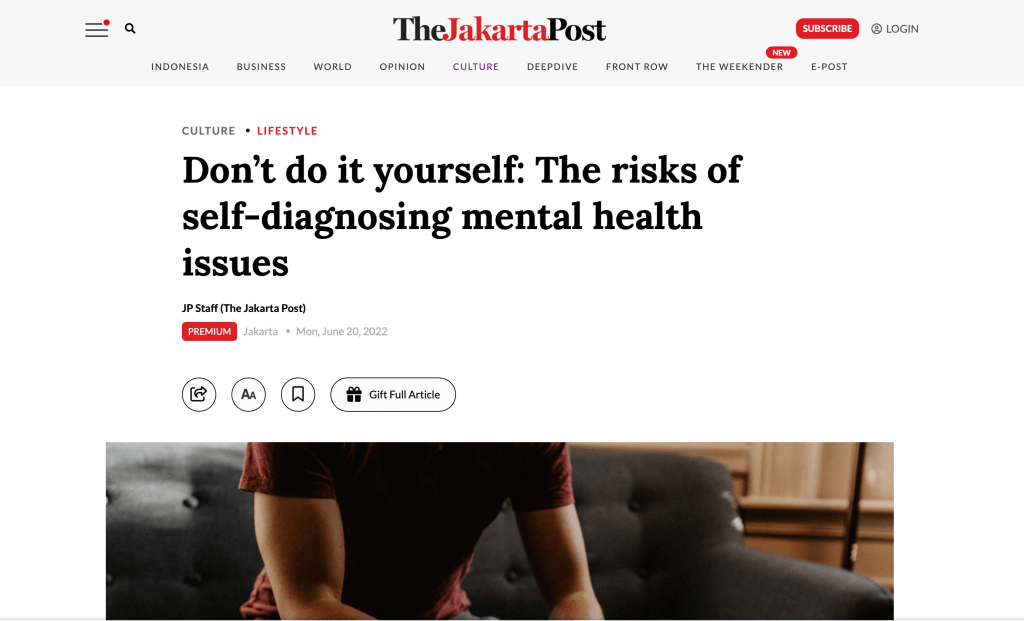
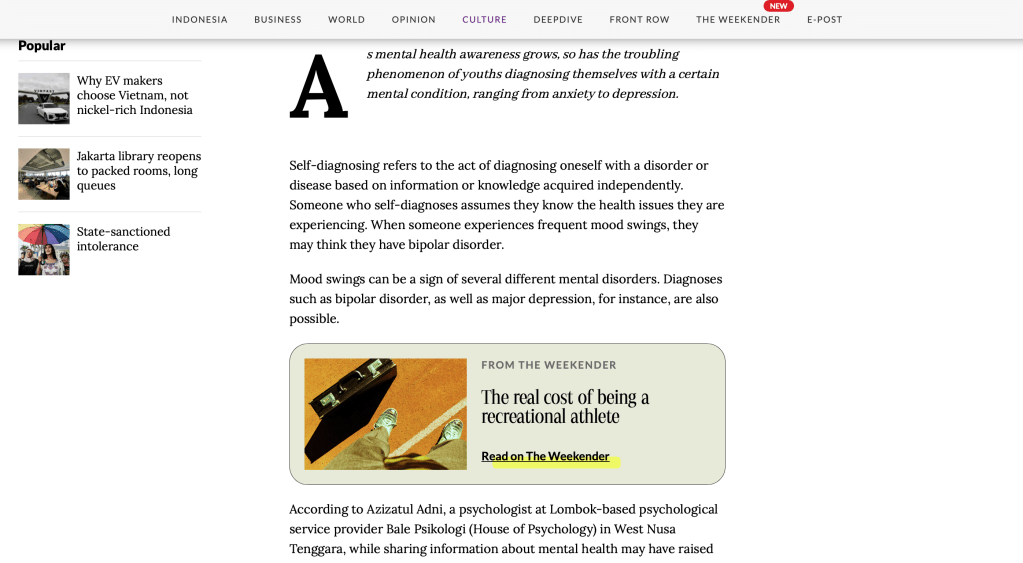
This was my original pitch. Published with The Jakarta Post, this piece was a turning point for me as a writer. It was my first reported article built on interviews with an expert source and people who’d been through what I was writing about.
The Challenge: Finding the Right Angle
The angle was the hard part. Self-diagnosis is easy to write badly: too stern and you shame people who are already struggling; too soft and the piece says nothing. I wanted to take the risks seriously without treating readers as foolish for turning to the internet when professional care is expensive and stigmatised.
Research & Interviews: Listening Before Writing
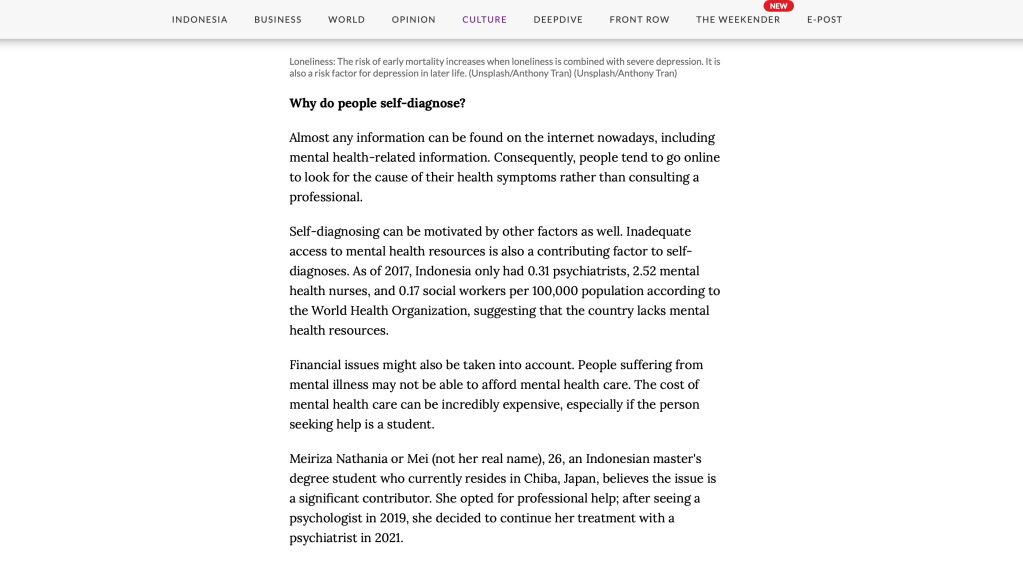
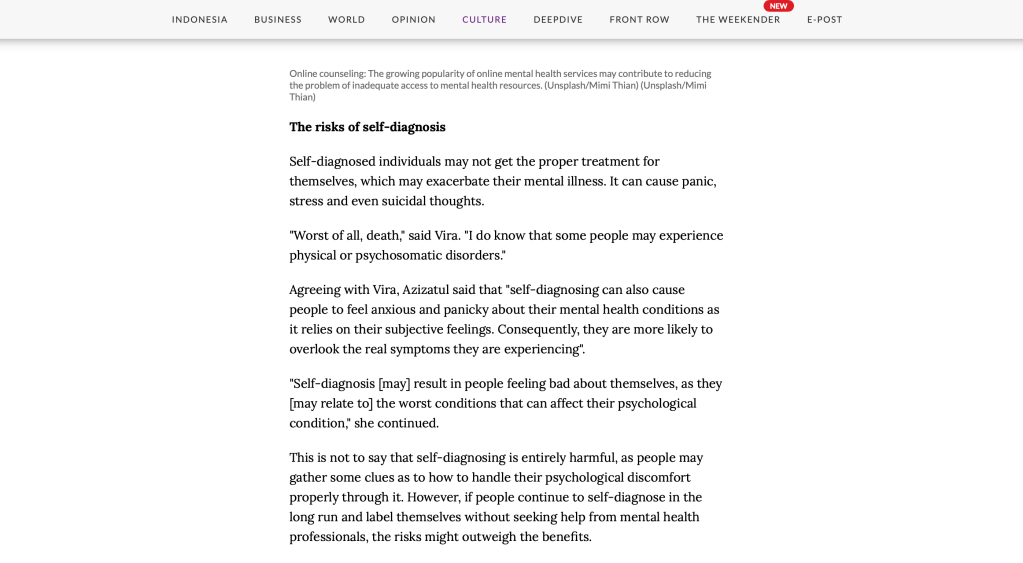
I interviewed a psychologist for the clinical side and two people living with mental illness for what it actually looks like from the inside. The psychologist informed me the specific ways self-diagnosis may go wrong, the kind of detail only someone who sees it in practice can offer. The two interviewees let me know the reason why people do it anyway.
My job in both cases was mostly to keep asking for examples until the abstract became concrete, then handled the personal interviews material carefully enough that they were comfortable being in print.
Editorial Decisions: Balancing Accuracy with Empathy
When working with sensitive mental health material, I had to be careful about every word—how I framed things, what I chose to include, and how I kept the focus on the people behind the story while still making the piece informative and responsible.
Writing it meant holding accuracy and accessibility together with plain language for a general readership without blurring the clinical distinctions. Editing was largely tone work: checking every line for anything that could read as blame, and making sure the piece left readers with somewhere to go rather than just a warning.
